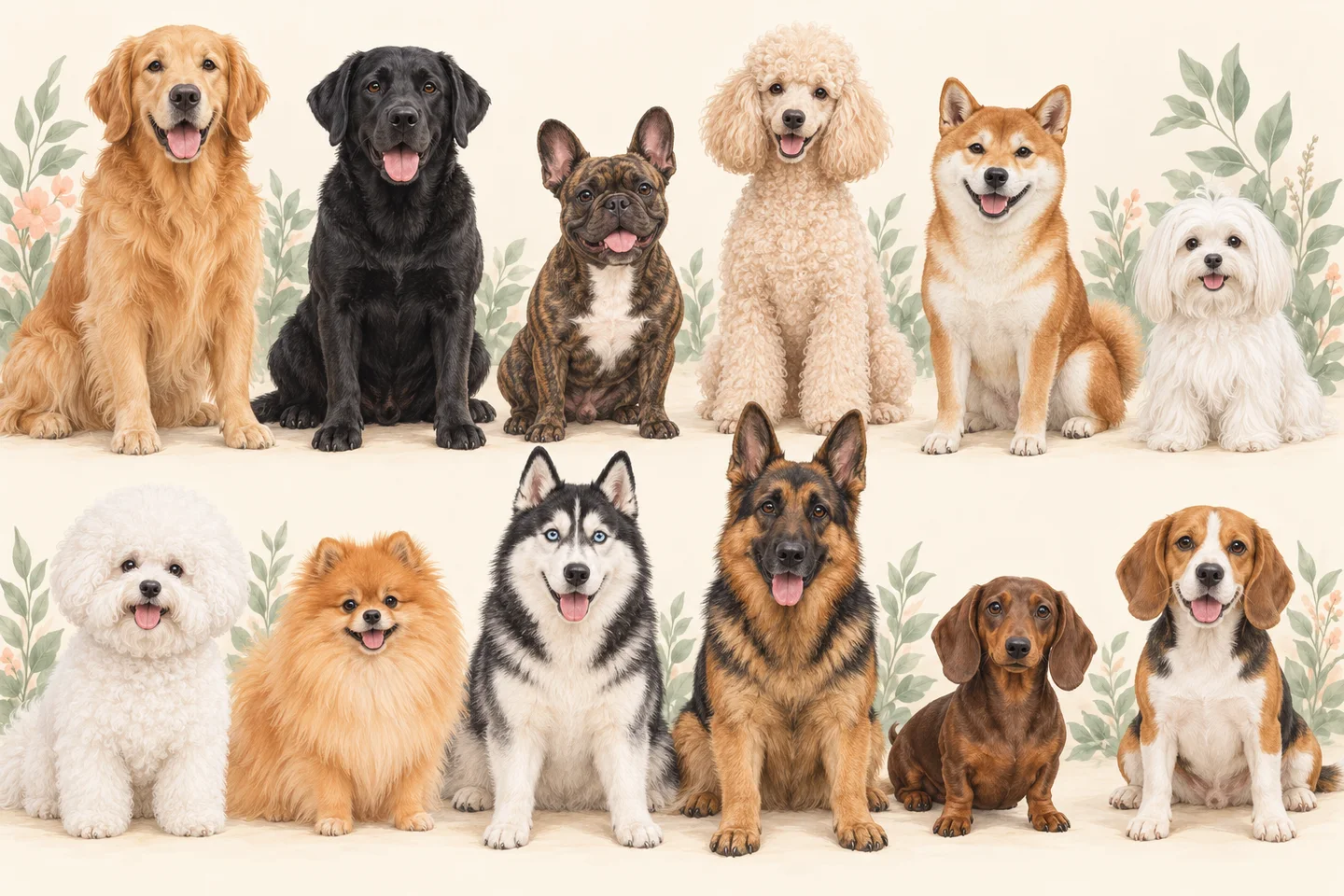
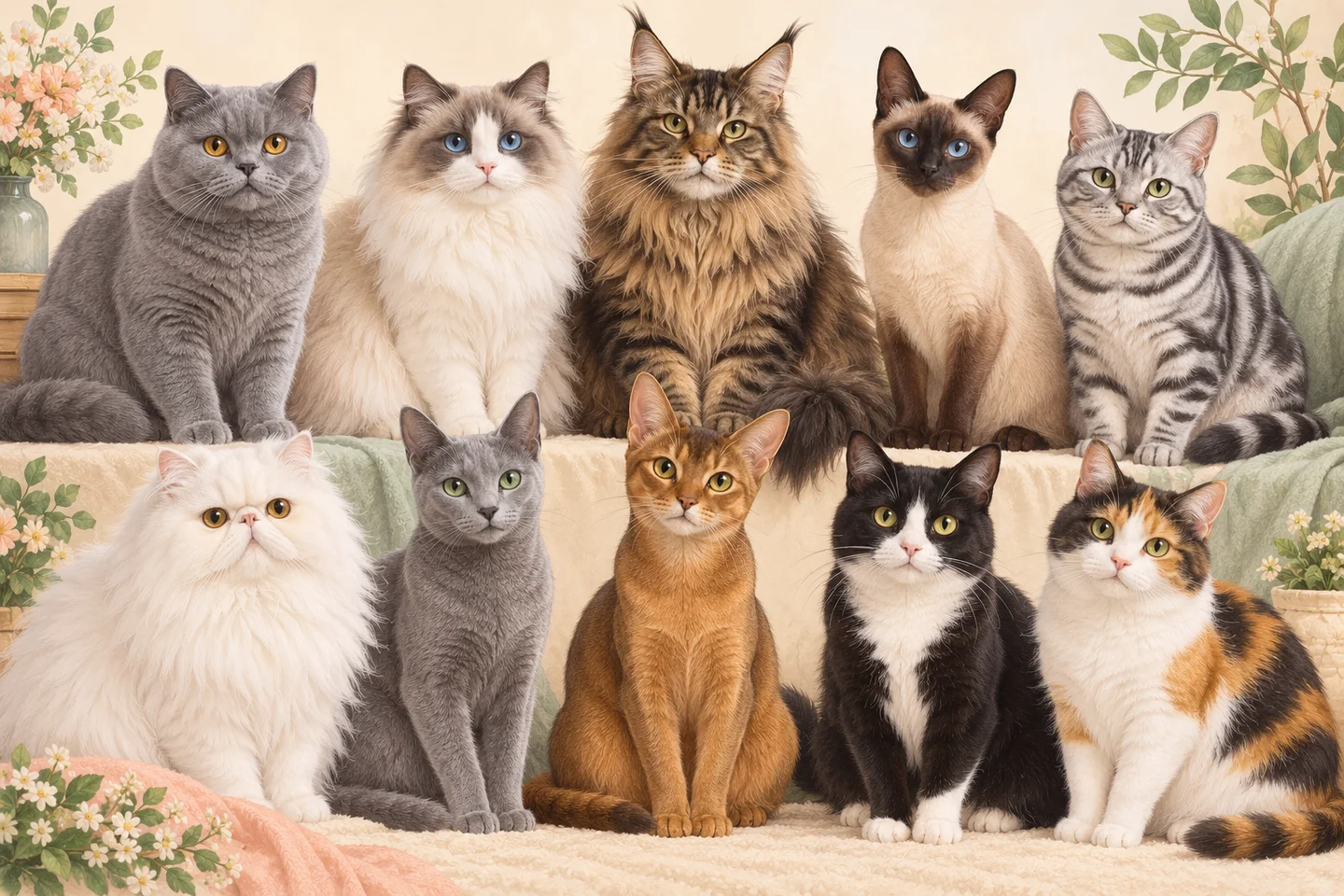
Dog and cat portraits, by breed Browse 30 dog and 18 cat entries, including mixed breeds. These are starting points for choosing reference photos and a creative format. Your own photo supplies the identity; a breed name never replaces the individual animal.
Dogs Cats AI concept illustration · visual inspiration, not a tested breed result
48 entries shown
Dogs French Bulldog Photo notes
Keep the entire ears and their actual position in frame; leave space above the head. Use an eye-level view without a close wide-angle lens; preserve the pet’s own nose and muzzle proportions. Labrador Retriever Photo notes
Light the face from the front or side so the eyes, nose and dark fur remain separate. Keep the entire ears and their actual position in frame; leave space above the head. Golden Retriever Photo notes
Include the neck ruff and visible fur edges. For video, start with a slow head turn or blink. Keep the entire ears and their actual position in frame; leave space above the head. German Shepherd Photo notes
Keep the entire ears and their actual position in frame; leave space above the head. Show both sides of the face and note any asymmetry. Check patches and stripes against the original. Dachshund · miniature & rabbit varieties Photo notes
For a full-body scene, show all legs and the tail. Keep the pet’s real proportions, including any individual differences. Keep the entire ears and their actual position in frame; leave space above the head. Poodle · toy, miniature & standard Photo notes
Use side light to show curl texture. Avoid heavy smoothing or a freshly altered coat as the only reference. Choose a sharp photo with both eyes visible. Preserve the real eye color, even when the two eyes differ. Beagle Photo notes
Keep the entire ears and their actual position in frame; leave space above the head. Show both sides of the face and note any asymmetry. Check patches and stripes against the original. Rottweiler Photo notes
Light the face from the front or side so the eyes, nose and dark fur remain separate. Show both sides of the face and note any asymmetry. Check patches and stripes against the original. German Shorthaired Pointer Photo notes
Show both sides of the face and note any asymmetry. Check patches and stripes against the original. For a full-body scene, show all legs and the tail. Keep the pet’s real proportions, including any individual differences. Bulldog Photo notes
Use an eye-level view without a close wide-angle lens; preserve the pet’s own nose and muzzle proportions. For a full-body scene, show all legs and the tail. Keep the pet’s real proportions, including any individual differences. Cane Corso Photo notes
Light the face from the front or side so the eyes, nose and dark fur remain separate. Keep the entire ears and their actual position in frame; leave space above the head. Cavalier King Charles Spaniel Photo notes
Include the neck ruff and visible fur edges. For video, start with a slow head turn or blink. Show both sides of the face and note any asymmetry. Check patches and stripes against the original. Yorkshire Terrier Photo notes
Include the neck ruff and visible fur edges. For video, start with a slow head turn or blink. Choose a sharp photo with both eyes visible. Preserve the real eye color, even when the two eyes differ. Australian Shepherd Photo notes
Show both sides of the face and note any asymmetry. Check patches and stripes against the original. Choose a sharp photo with both eyes visible. Preserve the real eye color, even when the two eyes differ. Doberman Pinscher Photo notes
Keep the entire ears and their actual position in frame; leave space above the head. Show both sides of the face and note any asymmetry. Check patches and stripes against the original. Pembroke Welsh Corgi Photo notes
For a full-body scene, show all legs and the tail. Keep the pet’s real proportions, including any individual differences. Keep the entire ears and their actual position in frame; leave space above the head. Miniature Schnauzer Photo notes
Use an eye-level view without a close wide-angle lens; preserve the pet’s own nose and muzzle proportions. Choose a sharp photo with both eyes visible. Preserve the real eye color, even when the two eyes differ. Boxer Photo notes
Use an eye-level view without a close wide-angle lens; preserve the pet’s own nose and muzzle proportions. Show both sides of the face and note any asymmetry. Check patches and stripes against the original. Pomeranian Photo notes
Include the neck ruff and visible fur edges. For video, start with a slow head turn or blink. Keep the entire ears and their actual position in frame; leave space above the head. Bernese Mountain Dog Photo notes
Show both sides of the face and note any asymmetry. Check patches and stripes against the original. For a full-body scene, show all legs and the tail. Keep the pet’s real proportions, including any individual differences. Siberian Husky Photo notes
Choose a sharp photo with both eyes visible. Preserve the real eye color, even when the two eyes differ. Show both sides of the face and note any asymmetry. Check patches and stripes against the original. Border Collie Photo notes
Show both sides of the face and note any asymmetry. Check patches and stripes against the original. For a full-body scene, show all legs and the tail. Keep the pet’s real proportions, including any individual differences. Samoyed Photo notes
Expose for the white fur so it retains texture; use a slightly darker plain background. Include the neck ruff and visible fur edges. For video, start with a slow head turn or blink. Chihuahua Photo notes
Keep the entire ears and their actual position in frame; leave space above the head. Choose a sharp photo with both eyes visible. Preserve the real eye color, even when the two eyes differ. Shiba Inu Photo notes
Keep the entire ears and their actual position in frame; leave space above the head. Show both sides of the face and note any asymmetry. Check patches and stripes against the original. Maltese Photo notes
Expose for the white fur so it retains texture; use a slightly darker plain background. Choose a sharp photo with both eyes visible. Preserve the real eye color, even when the two eyes differ. Bichon Frise Photo notes
Expose for the white fur so it retains texture; use a slightly darker plain background. Use side light to show curl texture. Avoid heavy smoothing or a freshly altered coat as the only reference. Shih Tzu Photo notes
Include the neck ruff and visible fur edges. For video, start with a slow head turn or blink. Use an eye-level view without a close wide-angle lens; preserve the pet’s own nose and muzzle proportions. Pug Photo notes
Use an eye-level view without a close wide-angle lens; preserve the pet’s own nose and muzzle proportions. Choose a sharp photo with both eyes visible. Preserve the real eye color, even when the two eyes differ. Mixed-breed dog Photo notes
An exact breed name is optional. The reference photo and your pet’s unique traits are the guide. Show both sides of the face and note any asymmetry. Check patches and stripes against the original. Cats Maine Coon Photo notes
Keep the entire ears and their actual position in frame; leave space above the head. Include the neck ruff and visible fur edges. For video, start with a slow head turn or blink. Ragdoll Photo notes
Choose a sharp photo with both eyes visible. Preserve the real eye color, even when the two eyes differ. Show both sides of the face and note any asymmetry. Check patches and stripes against the original. Persian Photo notes
Include the neck ruff and visible fur edges. For video, start with a slow head turn or blink. Use an eye-level view without a close wide-angle lens; preserve the pet’s own nose and muzzle proportions. Exotic Shorthair Photo notes
Use an eye-level view without a close wide-angle lens; preserve the pet’s own nose and muzzle proportions. Choose a sharp photo with both eyes visible. Preserve the real eye color, even when the two eyes differ. Devon Rex Photo notes
Keep the entire ears and their actual position in frame; leave space above the head. Use side light to show curl texture. Avoid heavy smoothing or a freshly altered coat as the only reference. Abyssinian Photo notes
Keep the entire ears and their actual position in frame; leave space above the head. Show both sides of the face and note any asymmetry. Check patches and stripes against the original. British Shorthair Photo notes
Choose a sharp photo with both eyes visible. Preserve the real eye color, even when the two eyes differ. Use an eye-level view without a close wide-angle lens; preserve the pet’s own nose and muzzle proportions. Siberian Photo notes
Include the neck ruff and visible fur edges. For video, start with a slow head turn or blink. Show both sides of the face and note any asymmetry. Check patches and stripes against the original. American Shorthair Photo notes
Show both sides of the face and note any asymmetry. Check patches and stripes against the original. Choose a sharp photo with both eyes visible. Preserve the real eye color, even when the two eyes differ. Russian Blue Photo notes
Light the face from the front or side so the eyes, nose and dark fur remain separate. Choose a sharp photo with both eyes visible. Preserve the real eye color, even when the two eyes differ. Scottish Fold Photo notes
Keep the entire ears and their actual position in frame; leave space above the head. Use an eye-level view without a close wide-angle lens; preserve the pet’s own nose and muzzle proportions. Munchkin Photo notes
For a full-body scene, show all legs and the tail. Keep the pet’s real proportions, including any individual differences. An exact breed name is optional. The reference photo and your pet’s unique traits are the guide. Minuet Photo notes
For a full-body scene, show all legs and the tail. Keep the pet’s real proportions, including any individual differences. Include the neck ruff and visible fur edges. For video, start with a slow head turn or blink. Norwegian Forest Cat Photo notes
Include the neck ruff and visible fur edges. For video, start with a slow head turn or blink. Keep the entire ears and their actual position in frame; leave space above the head. Ragamuffin Photo notes
Include the neck ruff and visible fur edges. For video, start with a slow head turn or blink. Choose a sharp photo with both eyes visible. Preserve the real eye color, even when the two eyes differ. Domestic / mixed-breed cat Photo notes
An exact breed name is optional. The reference photo and your pet’s unique traits are the guide. Show both sides of the face and note any asymmetry. Check patches and stripes against the original. Siamese Photo notes
Choose a sharp photo with both eyes visible. Preserve the real eye color, even when the two eyes differ. Show both sides of the face and note any asymmetry. Check patches and stripes against the original. Bengal Photo notes
Show both sides of the face and note any asymmetry. Check patches and stripes against the original. For a full-body scene, show all legs and the tail. Keep the pet’s real proportions, including any individual differences. Orange, tabby, tuxedo and calico describe a coat. You do not need to guess a pedigree. Choose domestic / mixed-breed cat when you are unsure, then show the actual markings. The same goes for a mixed-breed dog: face shape, ear position, fur and proportions matter more than matching a label.
How this directory was selected The directory covers the AKC 2025 top 20, CFA’s 2026 top 10, Anicom’s 2026 top 10 dogs and cats, plus regional and mixed-breed entries. Poodle and Dachshund sizes are grouped. Registration and insurance samples describe their own populations; they are not global search-volume rankings. Taiwan names use local wording, without a claimed Taiwan popularity rank.
Every entry can guide a photo-based request. Generation quality has not been validated separately for all 48 entries. Check the preview against your own photo before keeping or sharing it.